Soucy
Michael Erickson: Aftermarket Account Manager
When it comes to putting power to the ground, the difference between Tracks and Tires isn’t just preference—it’s PHYSICS.
Understanding how each system interacts with soil helps explain why tracks dominate in tough conditions, while tires excel in versatility and transport efficiency.
- How Tracks and Tires Actually Create Traction
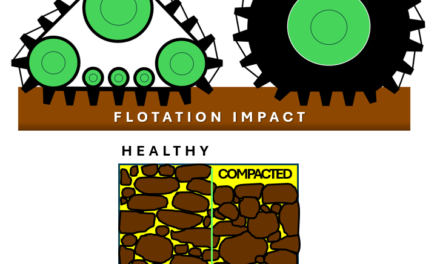
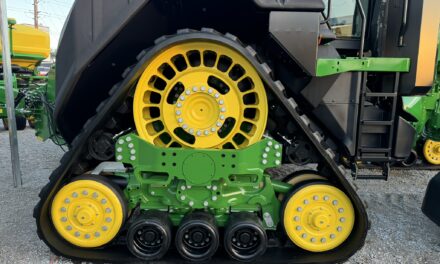
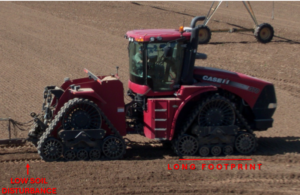
Tracks are designed to maximize contact with the ground. They feature a long footprint, full-width engagement, and low ground pressure. This leads to less sinking into the soil, reduced compaction, and more consistent traction.
Tires rely on concentrated contact and lug engagement. They have smaller contact patches and higher ground pressure, generating traction by digging into soil. This creates higher stress and more soil disturbance.
- Where Traction Comes From: Soil Shear
Tracks apply force evenly across a long footprint, creating smooth and predictable traction with less disturbance.
Tires focus force at the lugs, causing localized soil failure. This can generate high traction but results in more aggressive soil disruption.
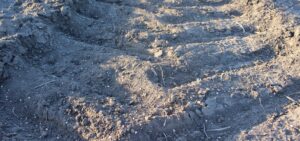
- The Key Difference: Slip
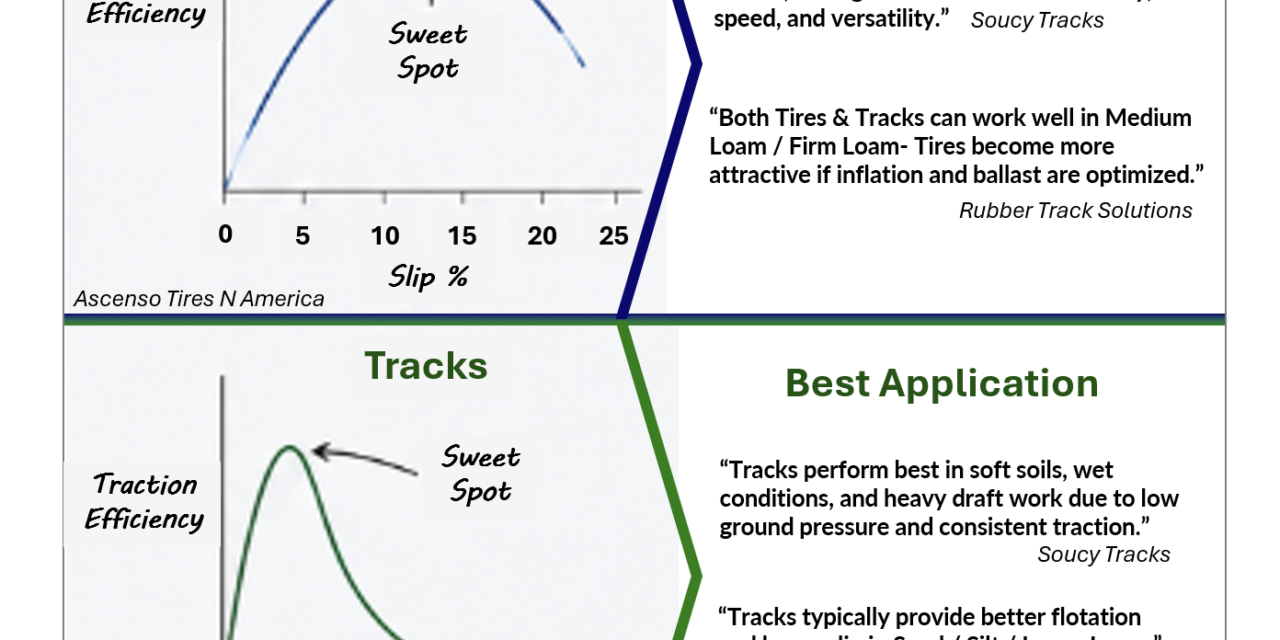
Tracks operate best at 2–6% slip, while tires typically require 8–15% slip. Tracks need less slip because they already engage a large soil area and reach maximum traction quickly.
Tires need more slip to activate lug engagement and create traction.
- Performance in Real Field Conditions
Tracks perform best in soft soils, wet conditions, and heavy draft work due to low ground pressure and consistent traction.
Tires perform best in transport, mixed terrain, and lighter work due to efficiency, speed, and versatility.
- Trade-Off Summary
Tracks offer low ground pressure, low slip, excellent soft soil performance, but lower road efficiency.
Tires offer higher versatility, better road performance, but require more slip and cause more soil disturbance.
- Bottom Line
Tracks distribute force across a large area, resulting in efficient, low-slip traction.
Tires concentrate force through lugs, requiring more slip but performing well in firm ground.
In simple terms: Tracks float and pull, while tires bite and push.
Rubber Track Solutions
Jerry Von Gruenigen: V.P. Sales & Marketing
The core difference between tires and tracks is how they transmit force into the soil. A tire applies load through a relatively smaller, curved contact patch, while a rubber track spreads the same machine weight over a longer and wider footprint. That larger footprint generally lowers average ground pressure, improves flotation, and reduces rutting in soft conditions. However, tracks do not eliminate compaction entirely, because pressure is not perfectly uniform under the whole track; there can still be localized pressure peaks under mid-rollers or bogie wheels.
Push vs. Pull
A useful way to explain the traction difference is the push-versus-pull effect. With tires, the lugs rotate into the soil and must generate thrust while the tire is also deforming and often building a soil wedge in front of itself, especially in wet or loose ground. In effect, the tire is often “climbing out” of the rut it creates. Tracks behave differently: their lugs are more continuously planted along the footprint, so the machine is moved forward with less soil wave formation and usually less visible rutting. This is why tracks often feel like they “pull” better under duress, especially in soft or wet soil.
Why Tracks Have a Different Optimum Slip Than Tires
Slip is the difference between how fast the machine should move based on wheel or track speed and how fast it actually moves over the ground. Some slip is necessary for traction; too little can mean over-ballasting or excess drag, while too much wastes fuel and tears up soil.
Tracks and tires have different optimum slip ranges because of their different contact mechanics:
● Tracks usually achieve best tractive efficiency at very low slip, often around 0–4%.
● Tires typically achieve best tractive efficiency at a somewhat higher slip, often around 5–12% depending on machine type, ballast, inflation, and soil conditions.
Why? Because a tire depends more on lug penetration, sidewall deflection, and localized shear in the soil to generate pull. A track has more lugs in contact at once and spreads torque over a much larger area, so it can generate the same draft force with less local soil failure and therefore less required slip.
Best Soil Conditions for Rubber Tracks vs. Tires
1. Wet soil
Tracks usually perform better in wet conditions because they float better, sink less, and maintain traction with lower slip. They are especially valuable when field access is the priority and avoiding deep ruts matters. That said, wet soil is risky for both systems because compaction can still occur even when rutting looks reduced.
2. Dry soil
In dry soil, both tires and tracks can perform very well. Tires often become more competitive here because the flotation advantage of tracks matters less. If tires are properly ballasted and inflated, they can deliver strong traction, lower cost, and excellent efficiency in dry fieldwork.
3. Soft soils
Tracks generally have the advantage in soft soil because they spread the load across a larger area, lowering average surface pressure and reducing sinkage. This usually means lower slip, better flotation, and less chance of getting stuck.
4. Hard or compact soils
On firm, hard ground, tires may perform as well as or sometimes better than tracks, especially when they are well-ballasted and properly inflated. Since sinkage is low, the extra footprint of tracks matters less, and the lower mechanical complexity and rolling losses of tires can be an advantage.
5. Sand, Clay, Silt, and Loam
● Sand / Silt / Loose Loam: Tracks typically provide better flotation and lower slip.
● Clay: Tracks often still outperform tires for traction, but sticky clay can build up in the undercarriage and become a maintenance issue.
● Medium Loam / Firm Loam: either system can work well; tires become more attractive if inflation and ballast are optimized.
Soil Compaction: Tracks vs. Tires
It is tempting to say tracks always compact less, but physics is more nuanced.
● Tracks usually create less rutting and often lower surface pressure.
● But tracked machines are often heavier, and the load can be concentrated under rollers.
● Properly inflated low-pressure radial tires can sometimes match or even beat tracks in topsoil pressure.
So, a more accurate statement is:
Tracks usually improve flotation and reduce rutting in soft conditions, while tires can be equally good or better for compaction if inflation pressure and ballast are correctly managed.
Tire Inflation Pressure, Ballasting, and Track Maintenance
For tires, air pressure is critical. Tire inflation strongly affects footprint shape, traction, and soil stress. Lower field pressure (within manufacturer limits) increases footprint size, lowers soil pressure, and improves traction efficiency. Ballasting is equally important because too little ballast causes excessive slip, while too much increases compaction and rolling resistance. Tracks remove much of the day-to-day inflation management issue, which is one reason they are attractive operationally. But they shift the maintenance burden to the undercarriage—track tension, rollers, alignment, and debris buildup become more important.
Best Agricultural Applications for Tracks vs. Tires
TRACKS PERFORM BEST WHEN:
● Soil is Wet, Soft, or Highly Variable
● Flotation is Critical
● Minimizing Rutting Matters
● Heavy Draft Loads must be Pulled with Low Slip
● Crops or Operations are Sensitive to Surface Disturbance
● Machines need to Stay Moving in Difficult Field Conditions
This makes tracks especially attractive in operations like heavy tillage, grain cart work, rice, soft-ground harvest, and situations where field access windows are tight.
TIRES PERFORM BEST WHEN:
● Soils are Firm to Medium
● Road Travel is Frequent
● Lower Ownership & Maintenance Cost Matter
● Inflation Pressure can be Actively Managed
● Flexibility across Fields and Transport Work is Important
Tires are often the better all-around choice for mixed farming conditions, higher-speed transport, and operations where ballasting and pressure management are well controlled.
The takeaway on Tracks vs. Tires
Tracks generally outperform tires in wet, soft, and loose soils because their larger footprint improves flotation, lowers slip, and reduces rutting. Tires, however, can be extremely effective in dry to firm soils and may equal tracks in compaction performance when inflation pressure and ballast are optimized. Tracks run best at lower slip because they distribute torque over a longer contact patch, while tires need slightly more slip to build traction through lug-soil shear. In practice, tracks are best where field mobility and flotation are critical, while tires are best where versatility, cost, transport, and pressure adjustability matter most.
Trackman
Tom Feldmann, Chief Manager of Engineering Development
From a physics standpoint, tires and rubber tracks generate traction through the same basic principle: tread lugs apply force to the soil, creating shear displacement. As the lug moves against the soil, the soil resists this movement by building shear strength until it reaches its peak capacity. Once that peak is exceeded, the soil structure fails and traction efficiency drops.
The key difference between tires and tracks is how each system distributes load and achieves usable traction.
A tire operates with a relatively small contact patch, meaning fewer lugs are engaged with the soil at any given time. To generate enough tractive force, the tire typically operates at a higher slip range, often around 8–12% slip, to fully mobilize the soil’s available shear strength.
Tires also tend to sink deeper into softer soils, creating a rut that the tire must continually “climb out” of as it moves forward. This additional sinkage further increases the amount of slip required for efficient operation.
Because a tire-and-wheel assembly is mechanically simple with relatively low internal rotational losses, operating at higher slip carries only a modest efficiency penalty. This makes tires highly effective in firmer soil conditions and transport applications where flotation demands are lower and efficiency at higher speeds is important.
Rubber tracks function differently. Their significantly longer footprint spreads machine weight across a much larger contact area, improving flotation and reducing ground pressure. With more tread lugs engaged simultaneously, tracks can generate high total thrust with much less shear displacement per lug. As a result, tracks typically achieve peak efficiency at lower slip ranges than tires.
This larger footprint gives tracks a major advantage in soft, wet, sandy, or highly tilled soils where minimizing compaction and maintaining flotation are critical. Tracks are especially beneficial in applications requiring high drawbar pull, heavy loads, or consistent traction
under challenging field conditions.
However, tracks introduce additional mechanical complexity. When a track system experiences excessive slip or overspeed, the undercarriage components such as rollers, idlers, sprockets, and the belt itself, experience increased rolling resistance, flexing losses, and internal friction. These parasitic losses rise quickly as slip increases, reducing overall system efficiency.
In simple terms, tires and tracks are optimized for different operating conditions. Tires are efficient, versatile systems that perform well at higher slip levels and in firmer ground conditions. Rubber tracks trade additional mechanical complexity for a larger, low-slip footprint that delivers superior flotation, reduced compaction, and exceptional traction in softer soils.
Selecting between tires and tracks ultimately depends on soil conditions, machine application, transport requirements, and the balance between traction efficiency, flotation, ride quality, and operating cost.
Superior Tire & Rubber
Jerrod Ossa, Aftermarket Sales Manager – AgriTraxx® Undercarriage Wheels
Grip, Slip, and Soil: The Physics Behind Ag Tires and Tracks:
Whether the rubber is hitting the road or soil, producers need to have an understanding of the physics behind what moves their machine regardless of if they use tracks or tires. Having this basic understanding of how both tracks and tires interact with the soil will help them understand when to operate the machine depending on soil conditions.
The basic physics concept we are referring to is force resulting in a push and pull method. Tracks and tires have different optimum slip because they transmit tractive force to the soil in different ways. Let’s highlight the difference between the two below.
Tires:
As noted in the previous article, tires have a smaller contact area with the soil compared to tracks. However, even though this contact area is small a great deal of force is still applied to propel the machine forward. As the engine transfers power to the axle and tires, torque is created, causing the tire lugs to dig into the soil and generate the pulling force that moves the machine forward. If too much power is applied quickly in this small contact area excess slip or spinning will result in rutting in the soil. Or in the case of wet soil rutting with the possibility of sinking into the soil. All of which just create headaches and additional work for busy producers.
What Crops/Application are Tires Best Suited For?
Tires are best suited for applications where versatility, speed, maneuverability, and transport efficiency are priorities. They perform well in firm, well-drained soils and are commonly used for row-crop work such as corn, soybeans, cotton, and small grains, especially when fields are dry enough to support the machine without excessive rutting. Tires are also a strong fit for hay and forage operations, spraying, mowing, loader work, and general utility tasks where frequent road travel and tight turns are needed.
Cost has been discussed as another determining factor when it comes to choosing between tracks and tires. Tires are generally cheaper and easier to maintain than tracks. Keep this in mind when determining which would be better suited for your application/crops.
Tracks:
Tracks are available in a range of sizes depending on the machine and application. On standard high-horsepower tractors, the widest tracks are typically around 30 to 36 inches. This larger footprint creates significantly more ground contact than tires, helping spread the machine’s weight over a greater surface area. Because tracks maintain more consistent contact with the soil, they can generate traction with less slip than tires, allowing the machine to move forward more efficiently under heavy loads or softer field conditions. This is typically why tracks are the better choice for wet fields/applications.
What Crops/Application are Tracks Best Suited For?
It would be best to consider tracks for any application that requires heavy pulling power, reduced compaction, and improved floatation in large challenging field conditions. Many producers choose tracks if they are pulling large, heavy grain carts and need to maintain traction to the soil. This traction allows the equipment to stay on top of the soil rather than sinking and causing ruts in the soil. Typical crops that require tracks are corn and soybean with large planters or heavy tillage tools. Rice or any wetland style field is another great use of tracks because of the floatation area that tracks create on the soil.
Conclusion:
Over the past few articles, we have explored soil compaction, physics of the operational differences of tires and tracks, as well as their ideal applications. It can be daunting to make the correct decision because of how expensive all this equipment can be. However, if you can determine your equipment type, number of acres you need to farm, and soil type this will allow a producer to make the correct choice for their application. Tracks or tires have both pros and cons, but both can be used to get the job done.
All information is provided in this blog solely to provoke thought. All deductions made from information on this site must be confirmed by Certified Ag Tire / Track Dealer & Tire/Track Manufacturer before use. Ag Tire/Track Talk does not recommend anyone conduct tire service work with exception of Certified Ag Tire/Track Dealer Professionals.